Home advantage in football is worth roughly 0.3 goals per match today, down from about 0.6 a generation ago. That single number explains a lot of bad betting: people are still pricing home teams the way their fathers did, in a sport that quietly stopped rewarding them as much.
The effect hasn’t vanished. It has shrunk, unevenly, and knowing where it’s still strong is more useful than knowing that it exists.
How home advantage in football has changed
Across Europe’s top divisions, home sides once won somewhere near half of all matches. That share has drifted down over the past two decades, with a sharp dip during the seasons played behind closed doors and only a partial recovery afterwards.
| Era | Approx. home win share | Approx. goal edge |
|---|---|---|
| 1990s | ~48% | ~0.6 |
| 2010s | ~45% | ~0.4 |
| Empty stadiums | ~41% | ~0.1 |
| Recent seasons | ~44% | ~0.3 |
The empty-stadium period is the most interesting row. When crowds disappeared, the edge collapsed by most of its value — then came back when people returned. That’s about as close to a controlled experiment as football will ever give us.
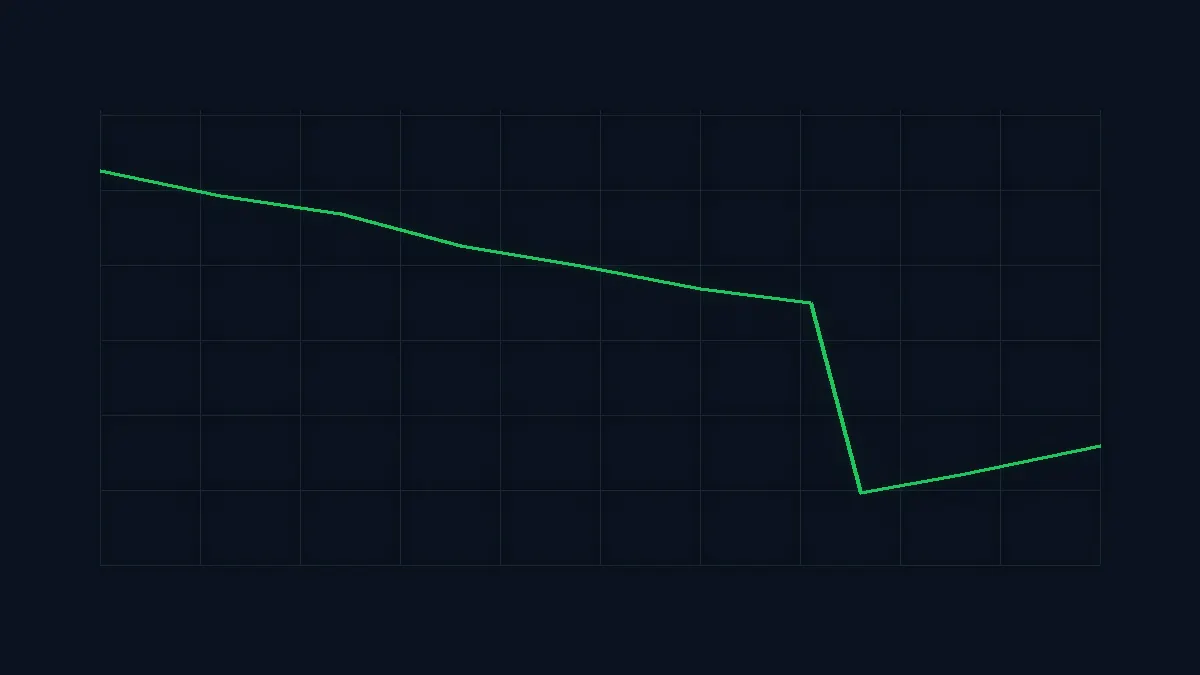
The edge has faded slowly, then dropped sharply when stadiums emptied.
Where the advantage actually comes from
Four mechanisms do most of the work, and they’re not equally strong.
Referee behaviour. The best-supported explanation. Officials in front of a loud crowd award marginally more stoppage time to a trailing home side, book away players slightly more often, and lean home on tight penalty calls. None of it is deliberate; all of it is measurable.
Travel and disruption. Long trips, hotel nights and unfamiliar routines cost something. In compact leagues where most journeys take two hours, this barely registers. In countries where a fixture means a flight and a time-zone change, it does.
Familiarity. Pitch dimensions, surface, light, the feel of the run-up to a corner. Small, real, and largest at grounds that are genuinely unusual — tight pitches, heavy surfaces, high altitude.
Tactical posture. Home teams attack more and defend deeper less often, which isn’t an advantage in itself but changes the shape of matches. It’s why home sides both score and concede more than a neutral model would expect.
Why home advantage is shrinking
Mostly because the things that produced it have been professionalised away.
VAR removed a slice of the refereeing bias — not all of it, but the most flagrant part. Travel is easier, sports science is standardised, and away preparation is no longer a coach guessing what the pitch will be like. Modern stadiums are also more uniform, and the atmospheric ones with fans close to the touchline are steadily being replaced by comfortable bowls.
The direction of travel is clear. A model built on 1990s assumptions about home teams will systematically overrate them today.
Where home advantage is still strong
Averages hide the useful part. The edge concentrates in specific situations:
- Lower divisions. Smaller grounds, closer crowds, less professional away preparation, officials under more direct pressure.
- Leagues with long or difficult travel. Geographically spread competitions, altitude, or genuinely hostile away trips.
- Fixtures that matter to the crowd. Relegation six-pointers and local derbies where the ground is full and loud, not half-empty on a Tuesday.
- Unusual pitches. Narrow, short, artificial or poorly drained surfaces that the home side trains on weekly.
Conversely, it’s weakest in elite European competition, at sanitised modern stadiums, in dead rubbers, and at clubs whose own supporters turn on them when things go wrong.

The average conceals the range — some grounds are worth far more than others.
Turning home advantage into a bet
The practical question isn’t whether home advantage in football is real. It’s whether the price in front of you has the right amount of it baked in.
Bookmakers have adjusted, but public money hasn’t entirely. Recreational bettors back home favourites disproportionately, and prices on big home teams at home frequently reflect that flow rather than the underlying probability. The opposite side — a well-organised away team in a quiet stadium against an average home side — is where the leftover value tends to sit.
Three habits worth building:
- Check the league’s own home record this season rather than assuming a universal figure. The spread between competitions is wider than the average suggests.
- Ask what kind of crowd this fixture will draw. A 40,000-capacity ground with 18,000 in it is not a fortress.
- Split every team’s form into home and away before you use it. Combined figures blur exactly the thing you’re trying to measure.
The old rule of thumb — add a goal for the home side and move on — was never precise, and today it’s actively misleading. Treat home advantage as a variable, not a constant, and most of its value comes from knowing when it’s smaller than the market thinks.
Want to see home and away form already weighed for you? Check today’s free AI football predictions, and read how expected goals (xG) separate performance from luck.
18+. Betting involves risk and you should never stake more than you can afford to lose. If gambling stops being fun, support is available at BeGambleAware.org.